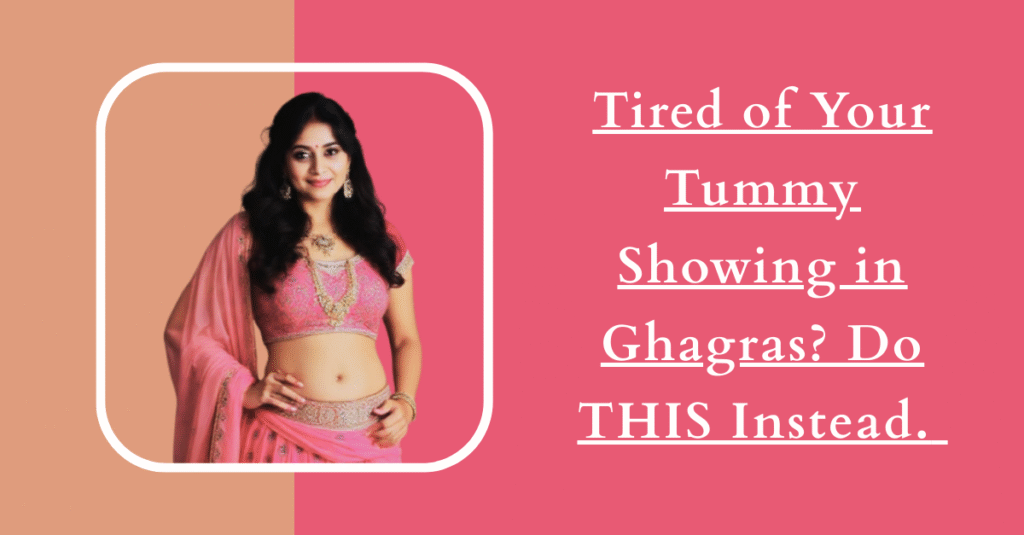
Tired of Your Tummy Showing in Ghagras? Do THIS Instead.
Introduction:
Let’s have a real conversation for a second. You’ve found the ghagra. The color is perfection, the embroidery makes your heart sing, and you imagined feeling like a queen. But in the trial room, under that harsh light, a familiar anxiety creeps in. The fabric pulls. The silhouette feels all wrong. All you can see is your midsection, and suddenly, the joy of the outfit is replaced by a single, stressful thought: “It shows everything.”
You start the mental gymnastics—standing sideways, holding the dupatta strategically, wondering if you can just avoid breathing deeply all night. I’ve been there. We all have. And the first thing I want you to know is this: The problem is not your body. The problem is a style system that hasn’t been unlocked for you.
For years, the advice has been, “Wear something loose.” But a shapeless tent makes you feel frumpy, not fabulous. The real secret, the one Bollywood stylists and savvy aunties have known forever, isn’t about hiding. It’s about masterful redirection. It’s about using the architecture of your outfit—the choli, the waistline, the drape—to create a flow so flattering, the eye doesn’t even think to linger where you’re self-conscious.
So, take a deep breath. Put the diet talk away. We’re not changing you; we’re changing the game. Here is your step-by-step guide to wearing a ghagra with unwavering confidence.
Tired of Your Tummy Showing in Ghagras? Do THIS Instead.
1. THE FOUNDATION: FORGET “HIDING,” THINK “HIGHLIGHTING”
Before we touch a single fabric, let’s shift the mindset. Your goal is not to shrink. Your goal is to create a balanced, elegant silhouette. Think of the classic hourglass or a flowing A-line—these shapes are pleasing to the eye because they create definition and movement. We’re going to use your ghagra to craft that exact illusion, drawing attention to your strengths—be it your collarbones, your arms, or the dramatic flare of the skirt.
2. THE CHOLI: YOUR SECRET WEAPON (IT’S NOT WHAT YOU THINK)
The blouse is the command center of this entire operation. Here’s exactly what to look for:
-
The Neckline is Non-Negotiable: Choose V-necks, Deep U-necks, or Sweetheart cuts. Why? They create a long, clean vertical line from your chin downward. This line pulls the gaze up to your face and gracefully away from the center of your torso. It’s optical illusion 101. Avoid high, round necklines, which can shorten your neck and box in your torso.
-
Hemline Heroics: The worst offender is a short, straight-hemmed choli that ends right at your waistband. This cuts you in half and highlights the very spot you want to soften. Instead, opt for a longer front (a “tunic-style” choli) or an asymmetrical hem. Even a slight diagonal line from a side slit breaks up the space and creates a lengthening effect. This extra inch of fabric is your new best friend.
-
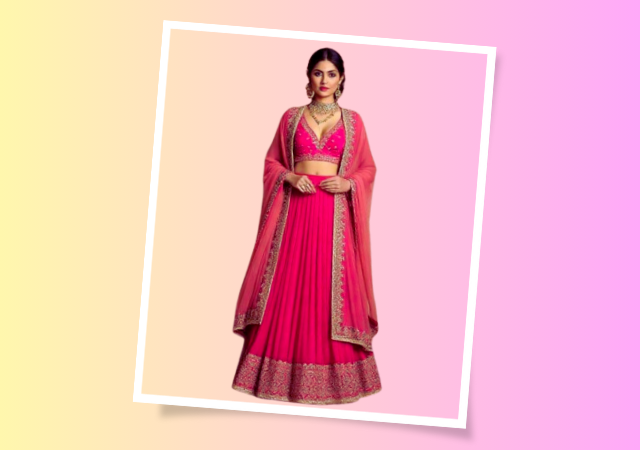
The Jacket Jackpot: If you want a true magic trick, invest in a long, open-front jacket or cape. This isn’t your short, structured bolero. Think of a fluid layer that falls from your shoulders to your hips or beyond. The two long vertical lines created by the open front instantly streamline your entire frame, while the layer adds regal elegance. It’s the single most effective tool in the arsenal.
3. THE GHAGRA: IT’S ALL ABOUT THE WAIST & FLOW
This is where the magic truly happens. The cut of your skirt determines everything.
-
Waistline Wisdom: Demand a high-rise (Atmanirbhar) waist. This is non-negotiable. A high waist sits at the smallest part of your torso, just below your bust. It provides gentle, natural support and, most importantly, allows the entire skirt to flow outward from that point. Your stomach isn’t confined; it’s given space under a graceful canopy of fabric. Avoid low-rise or natural waistlines that cut across the belly.
-
Silhouette Savvy: The A-line is your holy grail. It’s fitted at the high waist and flares gently outward, creating that perfect, balanced “A” shape. It’s universally flattering. Also consider a straight or slightly flared “paneled” lehenga—the vertical seams are incredibly slimming. Steer completely clear of mermaid or trumpet styles, as they cling to the hips and thighs before flaring, emphasizing every curve.
-
Fabric is Fate: Your fabric choice makes or breaks the drape. Fluid, forgiving materials like georgette, chiffon, and soft net are ideal. They follow the A-line command beautifully. Heavy silks or stiff velvets can be tricky; if you love them, ensure they are cut in a clean A-line without excessive gathers at the waist, which can add bulk.
4. THE DUPATTA: THE GRAND FINALE OF ILLUSION
Don’t just throw on your dupatta. Drape it with intention.
-
The “Open Palace” Drape: This is the ultimate power move. Drape your dupatta over both shoulders, but let the main “pallu” hang open and loose down the front. This creates two long, shimmering columns of fabric that run the length of your body, seamlessly camouflaging your center. It’s dramatic, it’s royal, and it’s brilliantly effective.
-
The “One-Side Statement” Drape: For a modern look, drape it heavily over one shoulder, letting the end fall long down the opposite side. This creates a dynamic diagonal line that, you guessed it, draws the eye on a slimming path.
-
What to Avoid: Wrapping the dupatta tightly across your chest and waist like a sari pallu. This adds a horizontal band of fabric right across your midsection, cutting your height and highlighting width.
5. THE FINISHING TOUCHES: DETAILS THAT DIRECT THE EYE
-
Embellishment Placement: Look for work that is concentrated on the hem of the ghagra (drawing the eye down to the flare) and on the choli (drawing the eye up). A heavily embroidered vertical panel on the lehenga can also be stunning. Try to avoid a large, central medallion or heavy pattern that sits directly on the abdominal area.
-
Color Strategy: Darker, solid colors on the bottom have a natural receding effect. A lighter or more decorated choli paired with a darker skirt is a classic slimming combo. But don’t fear prints! Choose all-over delicate prints or vertical patterns over large, bold horizontal motifs.
Your Action Plan: 3 Foolproof Formulas
-
For the Wedding Guest: Deep V-neck choli + High-rise A-line georgette ghagra + Long, beaded open jacket + Open-front dupatta drape. You’ll look polished, proportionate, and able to enjoy the dhamaal.
-
For the Modern & Chic Look: Asymmetrical hemline crop top (with a high-waisted skirt) + Paneled straight-cut lehenga + Statement choker necklace + Dupatta draped over one shoulder. It’s contemporary, sleek, and incredibly smart.
-
For Maximum Comfort & Camouflage: Elegant long-line jacket blouse (that covers the hips) + Soft net A-line skirt + Ditch the heavy dupatta for a sheer, flowy one worn in the Open Palace style. Ultimate comfort, zero fuss, all elegance.
Conclusion: (Tired of Your Tummy Showing in Ghagras? Do THIS Instead.)
At the end of the day, the most radiant thing you can wear is not a specific cut or color, but the certainty that you look beautiful. These rules are not constraints; they are your keys to freedom—the freedom to choose any ghagra you love and know how to make it love you back.
So the next time you step into a ghagra, remember: you are not trying to disappear. You are learning to architect your spotlight. Stand tall, drape with purpose, and own the room. Your confidence will outshine every sequin.
Hope you liked the article “Tired of Your Tummy Showing in Ghagras?”
If you have any questions, feel free to DM me anytime—I’m happy to help!
Found this guide helpful? Share it with a friend who needs this!
And tell me in the comments: Which styling trick are you excited to try first? ✨🙌
Read More: Are You Wearing the WRONG Saree Length? (Fix It Now!)

My name is Rohit Vagh and I’m a content writer specializing in fashion and lifestyle. I have three years of experience in this field and have written various articles. My writing style is creative and engaging, and I strive to create content that resonates with my readers. I have a deep passion for fashion and am constantly researching the latest trends and styles to make sure my readers are up to date. I’m excited to continue my career in blogging, and I’m always looking for new opportunities in the fashion and lifestyle space.